

MSME Briefing Bureau
Why early movers are studying Jharkhand’s textile policy more closely now
Fifteen days after Jharkhand unveiled its new textile and industrial policies, the initial headlines have faded. That is precisely when serious entrepreneurs should begin paying attention. The real value of a policy is rarely found in the press release; it lies in understanding where governments intend to direct capital, jobs and infrastructure over the next decade. Jharkhand’s latest policy framework offers an important clue: India’s mineral capital wants to become a manufacturing destination.
Jharkhand’s Textile Bet Beyond Minerals Today
For decades, Jharkhand occupied a familiar place in India’s economic story. It was the land of coal, iron ore and steel plants. The state’s mineral wealth estimated at nearly 40 per cent of India’s reserves helped build industries across the country.
Yet, policymakers in Ranchi have increasingly recognised a structural weakness: heavy industries generate significant economic output, but comparatively fewer jobs. In a young state where employment remains a political and economic priority, diversification is no longer optional.
That is the context in which the Jharkhand Textile, Apparel & Footwear Policy, 2026, read alongside the Jharkhand Industrial and Investment Promotion Policy (JIIPP), 2026, should be examined.
The announcement itself is no longer new. The question now is whether entrepreneurs are looking at the policy through the right lens.
The Policy Is Not About Textiles Alone
Most readers see a textile policy and immediately think of garment factories.
That would be a mistake.
The larger objective appears to be creating a light manufacturing ecosystem capable of complementing the state’s existing industrial base. Textiles, apparel and footwear are simply the chosen vehicles because they are labour-intensive sectors with relatively low entry barriers.
This is particularly significant at a time when manufacturers in traditional hubs are facing rising costs.
- Land prices continue to increase in established industrial states.
- Labour availability remains inconsistent in several clusters.
- Environmental compliance costs are becoming stricter.
- Export buyers are demanding sustainable production practices.
Jharkhand is attempting to position itself as a solution to these challenges.
The Tasar Advantage Few States Can Match
One of the least discussed aspects of the policy is Jharkhand’s dominance in Tasar silk production.
The state contributes nearly 71 per cent of India’s Tasar raw silk output, supporting more than two lakh artisans, many from tribal communities. While this has traditionally been viewed through the lens of rural livelihoods, policymakers appear to be asking a different question:
Can Tasar become the foundation of a premium textile ecosystem?
If successfully developed, Jharkhand could potentially position itself as a source for:
- Premium silk apparel.
- Sustainable fashion brands.
- Export-oriented handcrafted products.
- Technical blends combining traditional and modern fibres.
For investors, this presents a proposition that few competing states can replicate.
The Incentives Are Designed to Reduce Risk
Every industrial policy promises incentives. The real test lies in determining whether they materially improve project viability.
Jharkhand’s framework attempts to do precisely that.
Key provisions include:
Capital Support
- 20–35 per cent Comprehensive Project Investment Subsidy (CPIS).
- Fixed capital support of up to ₹50 crore.
- Additional benefits for priority sectors, including technical textiles.
Tax Benefits
- 100 per cent net SGST reimbursement for seven years.
- An additional 40 per cent reimbursement for three years.
Energy Incentives
- ₹2 per unit power tariff subsidy.
- Complete waiver of electricity duty.
Employment Support
- Wage assistance ranging from ₹5,000 to ₹6,000 per employee per month for five years.
- Support extending to statutory contributions such as EPF and ESI.
Taken together, these measures are designed to address the three variables that concern MSMEs most: capital expenditure, operating costs and workforce expenses.
Follow the Infrastructure, Not the Incentives
Industrial history repeatedly offers the same lesson.
Companies that succeed do not merely chase subsidies—they follow infrastructure.
Jharkhand’s emerging nodes deserve closer attention:
- Ranchi – administrative centre with stronger connectivity.
- Deoghar – an evolving economic corridor with improving infrastructure.
- Giridih – strategically positioned for industrial diversification.
- Dumka – benefiting from an established artisan ecosystem.
Entrepreneurs evaluating the state should ask practical questions:
- Where will logistics parks emerge?
- Which districts will receive faster utility connections?
- How quickly will industrial land become scarce?
- Which clusters will attract ancillary industries?
The answers to these questions are likely to matter more than the subsidy percentage itself.
A Quiet Push Towards Green Manufacturing
Another noteworthy aspect is the emphasis on sustainability.
The policy encourages:
- Zero Liquid Discharge (ZLD) systems.
- Renewable energy adoption.
- Solar-assisted manufacturing processes.
- Environmentally compliant industrial practices.
This reflects a broader reality.
International buyers increasingly expect suppliers to demonstrate compliance with environmental standards. The European Union’s regulatory environment and evolving sustainability requirements are already influencing sourcing decisions globally.
For Jharkhand, encouraging green manufacturing is not merely an environmental exercise—it is an export strategy.
The Window for Early Movers
Industrial policies typically create three categories of participants.
- Companies that move early.
- Companies that wait for proof.
- Companies that arrive after the ecosystem is already established.
History suggests that the first category captures disproportionate advantages.
Fifteen days after the policy announcement, stakeholder consultations are still shaping implementation. Land identification, infrastructure planning and administrative mechanisms remain works in progress.
That means the opportunity today is not simply to invest.
It is to engage.
Businesses should consider:
- Reviewing the final policy notifications in detail.
- Participating in consultations where possible.
- Mapping potential suppliers and logistics partners.
- Assessing land availability across designated districts.
- Building relationships with state agencies before competition intensifies.
Final Thoughts
Jharkhand is unlikely to replace Tamil Nadu, Gujarat or Karnataka overnight.
However, that may not be the right benchmark.
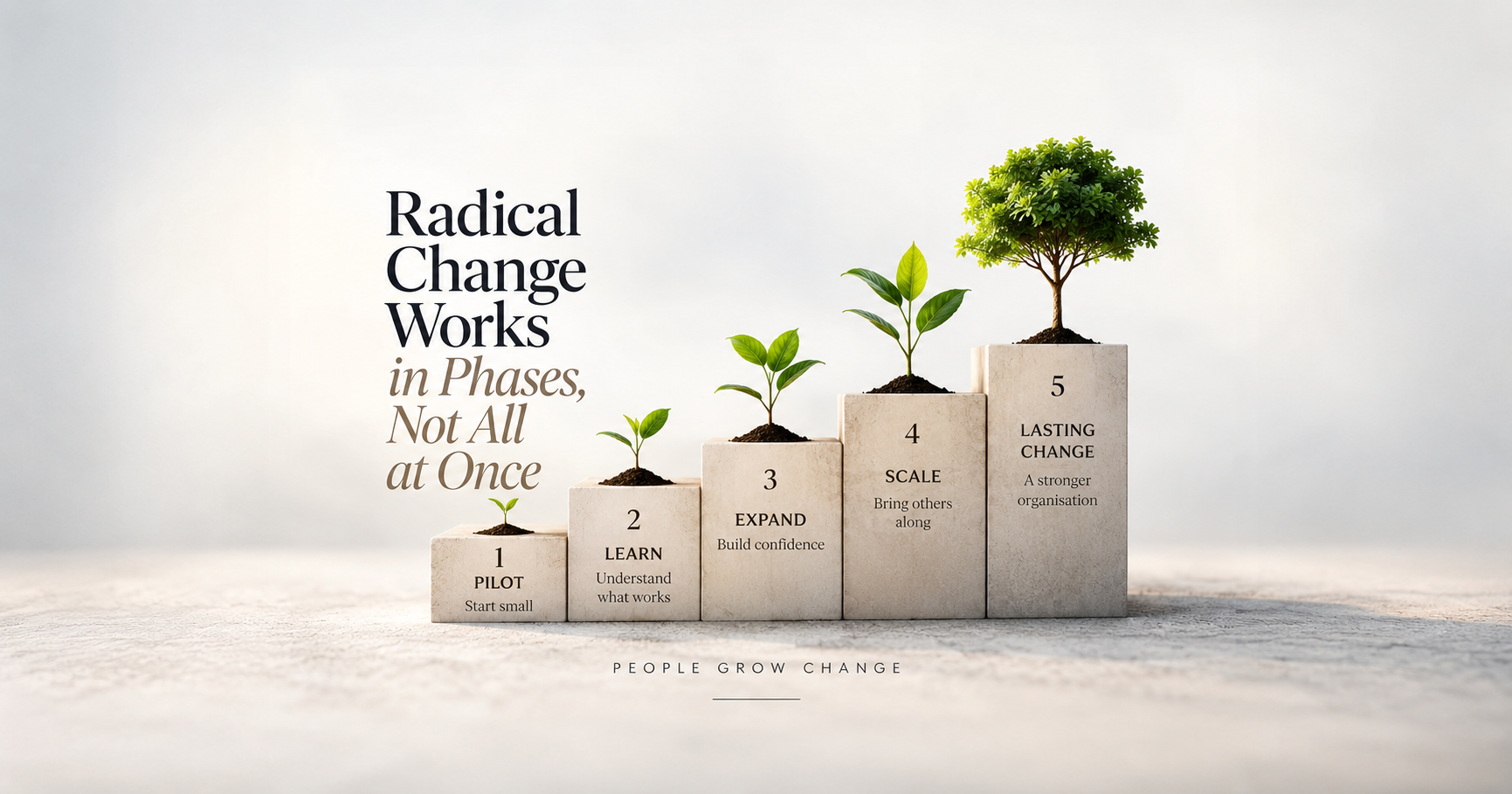
The more relevant question is whether the state can emerge as India’s next significant destination for labour-intensive manufacturing over the next ten years.
Its mineral wealth built one chapter of its history.
The government’s latest policy framework suggests it intends to write another—one measured not in tonnes of ore extracted, but in factories built, jobs created and products shipped to markets far beyond its borders.
For entrepreneurs willing to think beyond established industrial maps, Jharkhand may be worth a second look.




Leave a Reply