

By Haresh Jhala:
The yarn-price squeeze is crushing Surat’s small powerloom owners hard
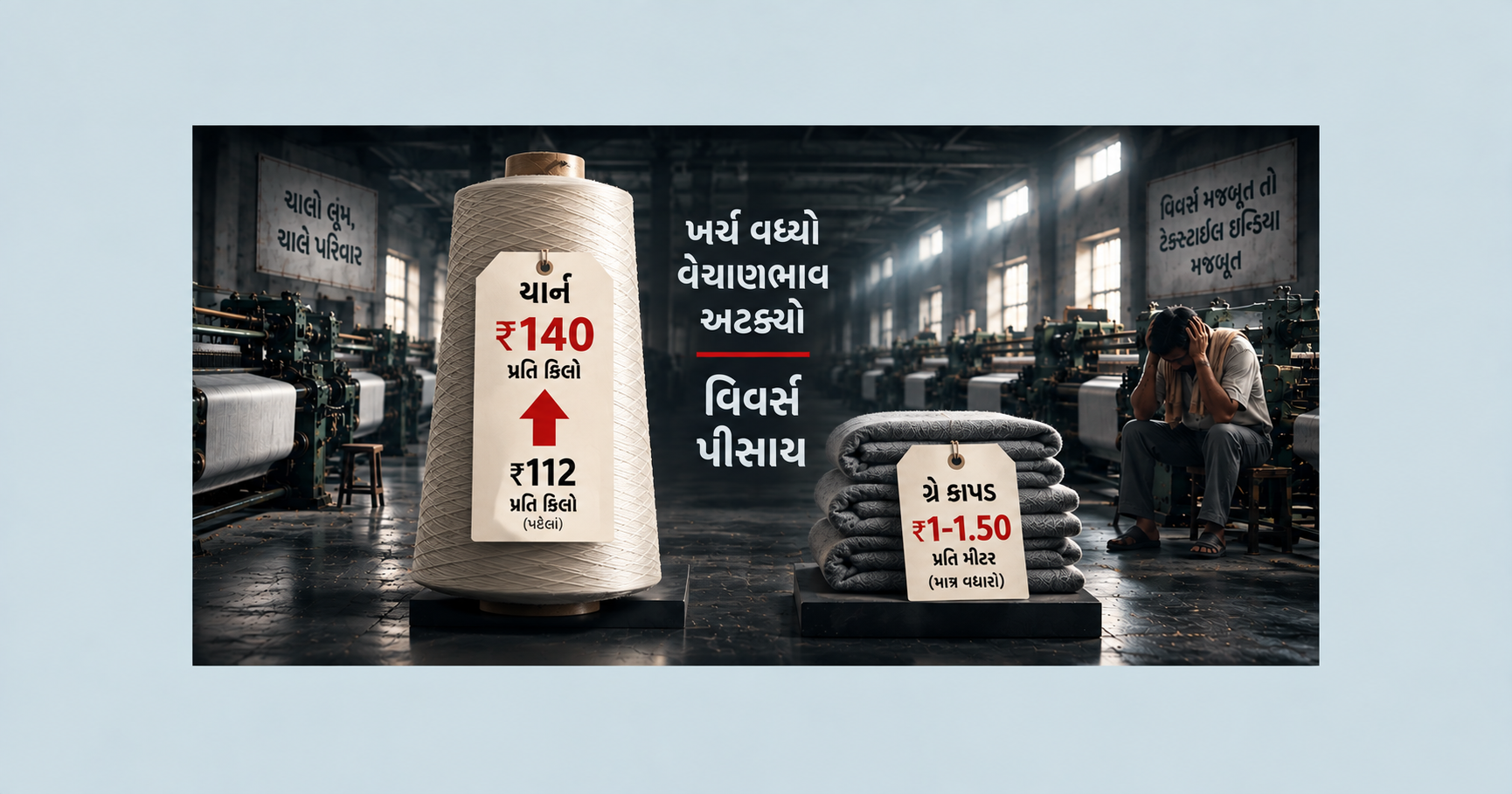
A powerloom does not fall silent because its machine has broken. It falls silent when its owner can no longer see a viable future. In Surat, yarn prices have surged while grey-cloth buyers continue to demand yesterday’s rates. The result is brutally simple: the smallest producer is absorbing a cost shock created upstream and a price squeeze imposed downstream. When one side can change the arithmetic overnight, why must the other carry the loss alone?
The All India Weavers Association poster calls for a boycott of yarn purchases from companies, large and small. It alleges that while PTA and MEG rose ₹3–4 per kg, DTY and FDY prices rose ₹5–7 per kg; its calculation says the real impact should have been only ₹1–2 per kg. Why should weavers absorb input shocks whose pricing basis is undisclosed?
The Federation of Gujarat Weavers Welfare Association (FOGWA) has appealed to units to reduce output for about a month because polyester-yarn prices and weak grey-fabric realisations have made operations unviable. Around 1.5 lakh powerlooms have begun cuts; some take two weekly holidays, others reduce a shift. The impact could reach 40,000–50,000 workers.
Surat has 7 lakh to 8 lakh weaving units, operating round the clock in shifts. In Unn, Zahid Kapadia of the Unn Powerloom Association said more than 800 weaving factories, with around 30,000 powerloom machines across eight industrial estates, would shut Tuesday and Wednesday each week. Yarn is bought at the new rate while grey-fabric buyers demand the old rate. The owner is trapped between input and buyer.
A yarn manufacturer can revise a price in one line; a powerloom owner cannot revise electricity bills, rent, workers’ advances, bank instalments, machine maintenance or household expenses, or force a trader to accept a grey-fabric rate overnight. Polyester yarn has risen from ₹112 to ₹140 per kg — ₹28 more. Yet the market has accepted only ₹1–₹1.50 per metre. As Vishnubhai Patel said: “Grey fabric that earlier cost around Rs 16 per metre should have increased by around Rs 5 following the rise in yarn prices. However, the market has accepted an increase of only around Rs 1 to Rs 1.50.” Loss starts when production runs below true production cost.
The chain remains: crude oil and naphtha affect PTA and MEG; PTA and MEG affect polyester melt; melt becomes POY; POY becomes FDY and DTY. No manufacturer should sell below cost. Feedstock volatility cannot justify opaque pricing, sudden revisions or conditions that prevent planning.
The Southern Gujarat Chamber of Commerce and Industry (SGCCI) has produced numbers. On August 22, it assessed Brent crude at $92.74 a barrel, indicative melt at ₹97.81 per kg, and domestic price at ₹105.73 — an apparent ₹7.92 per kg gap at melt stage. Normal POY conversion, including reasonable profit, is ₹15–16 per kg, but had reached ₹29.07, an additional ₹12 per kg delta burden. Is this chain transparent, proportionate and fair to downstream industry?
FOGWA representatives allege yarn prices rose beyond underlying input costs. FOGWA president Ashok Jirawala has questioned why such an increase is justified when crude has not risen in the same proportion. These concerns require independent examination of costs, stock and pricing behaviour.
Surat relies heavily on FDY and DTY; Bhiwandi uses cotton, polyester and blended yarns; Salem and other Tamil Nadu weaving belts use cotton, polyester staple, viscose and blends. Their economics differ; their vulnerability is identical: a weaver buys small lots, has limited working capital and cannot pass costs to buyers as quickly as yarn suppliers revise rates.
A government baseline survey counted about 24.86 lakh powerlooms supporting approximately 44 lakh workers. Behind those numbers are workers, owners, preparers, jobbers, transporters, traders, technicians and dependent families. For a piece-rate worker, two days can mean lost income, postponed medicine, unpaid rent or borrowed groceries.
The answer is transparent, cost-based pricing. The Union Textile Ministry and regulators should establish a weekly public MMF price dashboard tracking crude oil, PTA, MEG, polyester melt, POY, FDY and DTY by grade, alongside import duties, freight, exchange-rate movements and stocks. Every revision should carry an auditable explanation.
The powerloom owner is not asking for an artificial discount. He is simply asking for fair arithmetic for survival and dignity. When one side revises overnight while the other sells at yesterday’s rate, the market is tilted against the producer. India cannot celebrate textile growth and exports while yarn-to-fabric hands are pushed towards silence. The yarn-price chain must face scrutiny; the powerloom owner must not pay for opacity.




Leave a Reply