
By Haresh B. Jhala:
A tariff to punish Moscow can raise costs for America, too, through trade.
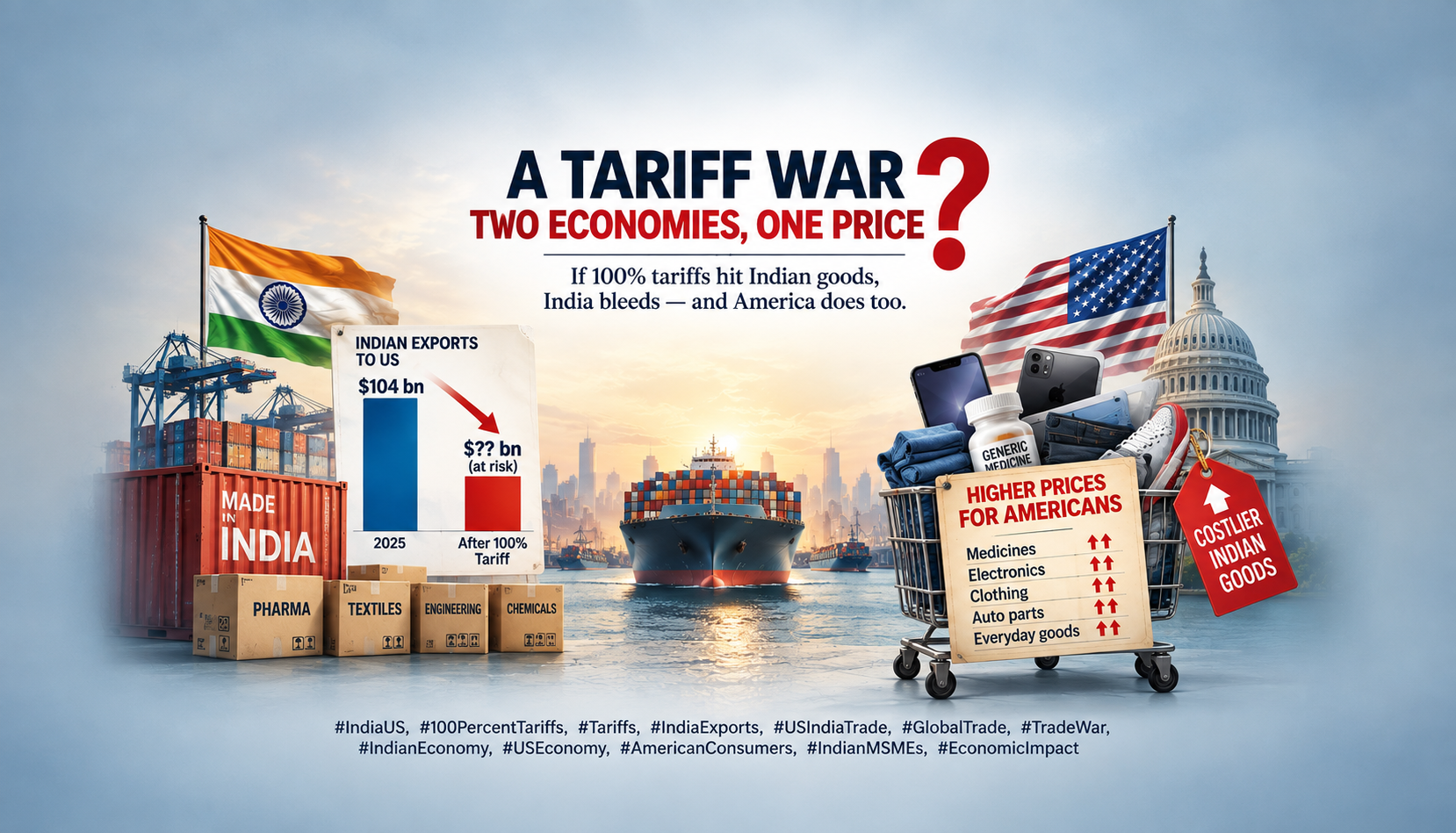
A 100% tariff on Indian goods would not be painless for India. It could squeeze exporters, disrupt orders, pressure margins and put thousands of MSMEs serving the American market under severe strain. But there is another side to this tariff weapon that Washington cannot wish away: the cost does not stop at India’s border. It travels through American importers, manufacturers, distributors and, ultimately, consumers. Both economies could therefore pay for the same geopolitical objective, though in different ways.
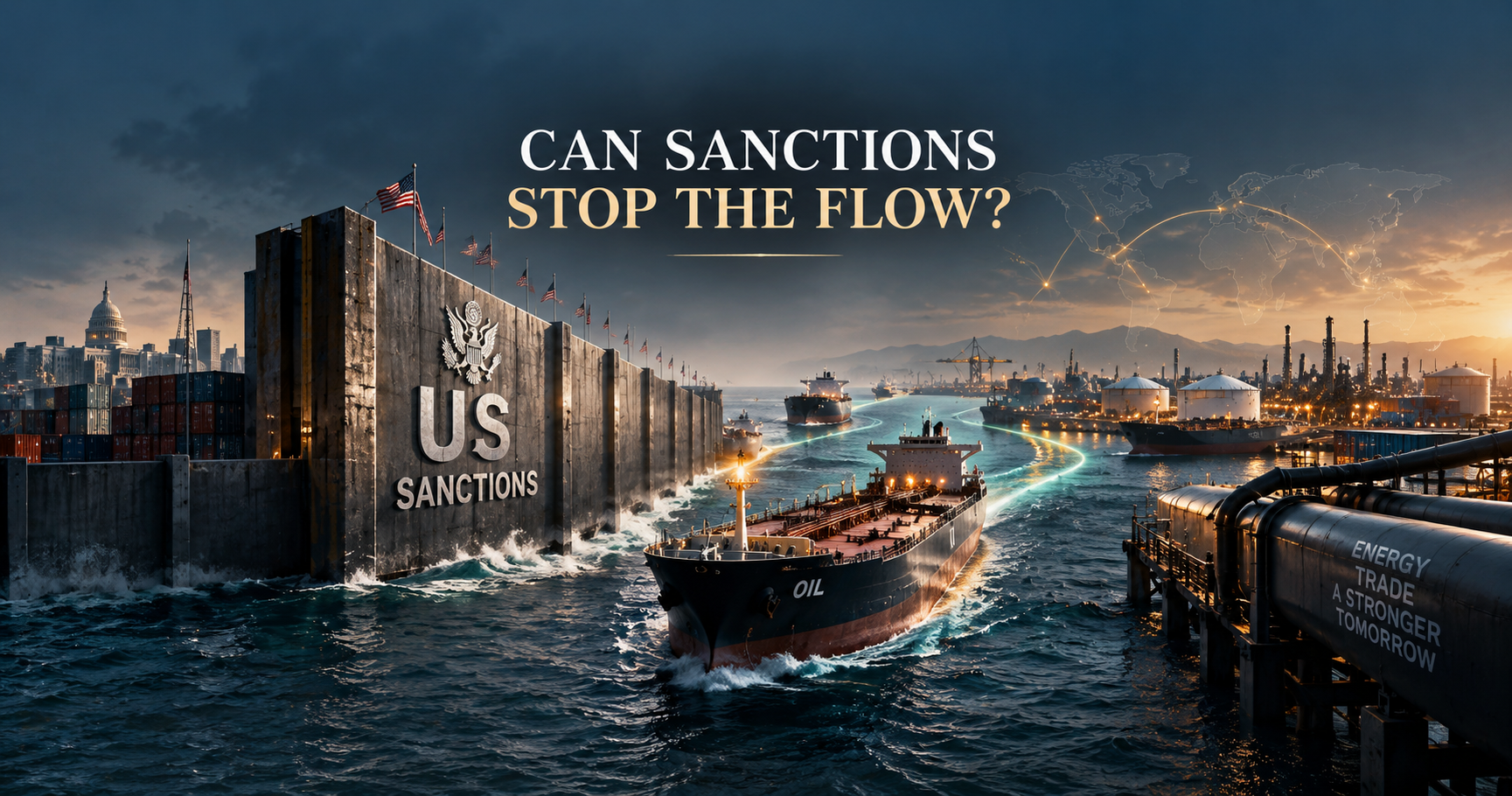
The starting point is the Lindsey O. Graham Sanctioning Russia and Iran Act of 2026. Signed into law by President Donald Trump, the legislation gives the US President authority to impose tariffs of up to 100% on countries that continue significant purchases of Russian oil and other energy. It does not automatically impose a 100% tariff on India. The decision remains with the President. That distinction matters.
India, however, is clearly exposed.
Why does New Delhi continue buying Russian crude? The straightforward answer is energy security. India imports around 90% of its crude requirement, while Russian oil accounted for more than half of its crude imports in July 2026. With disruptions affecting Middle Eastern supplies, Russian barrels have become an important part of India’s refinery economics and energy-security calculations.
But there is a larger question about how the principle of “funding a war” is being applied. India imported $981.6 million worth of goods from Ukraine in 2025, including $852.3 million of animal and vegetable fats and oils; sunflower, safflower and cottonseed oil alone accounted for about $833.3 million. India was not buying these products to support Ukraine’s war effort. It was buying commodities it needed from a country that needed export markets. The transaction generated revenue for Ukrainian producers, just as India’s purchase of Russian crude generates revenue for Russian producers. Yet it would be too simplistic to describe either transaction as direct financing of a war. If commercial purchases from a country at war are to be treated as indirect support for its war effort, that principle needs to be applied consistently—not selectively.
If Washington exercises the full tariff authority, Indian exporters would face a severe shock. The US imported more than $100 billion of goods from India in 2025, including pharmaceuticals, electronics, engineering products, textiles and other manufactured goods.
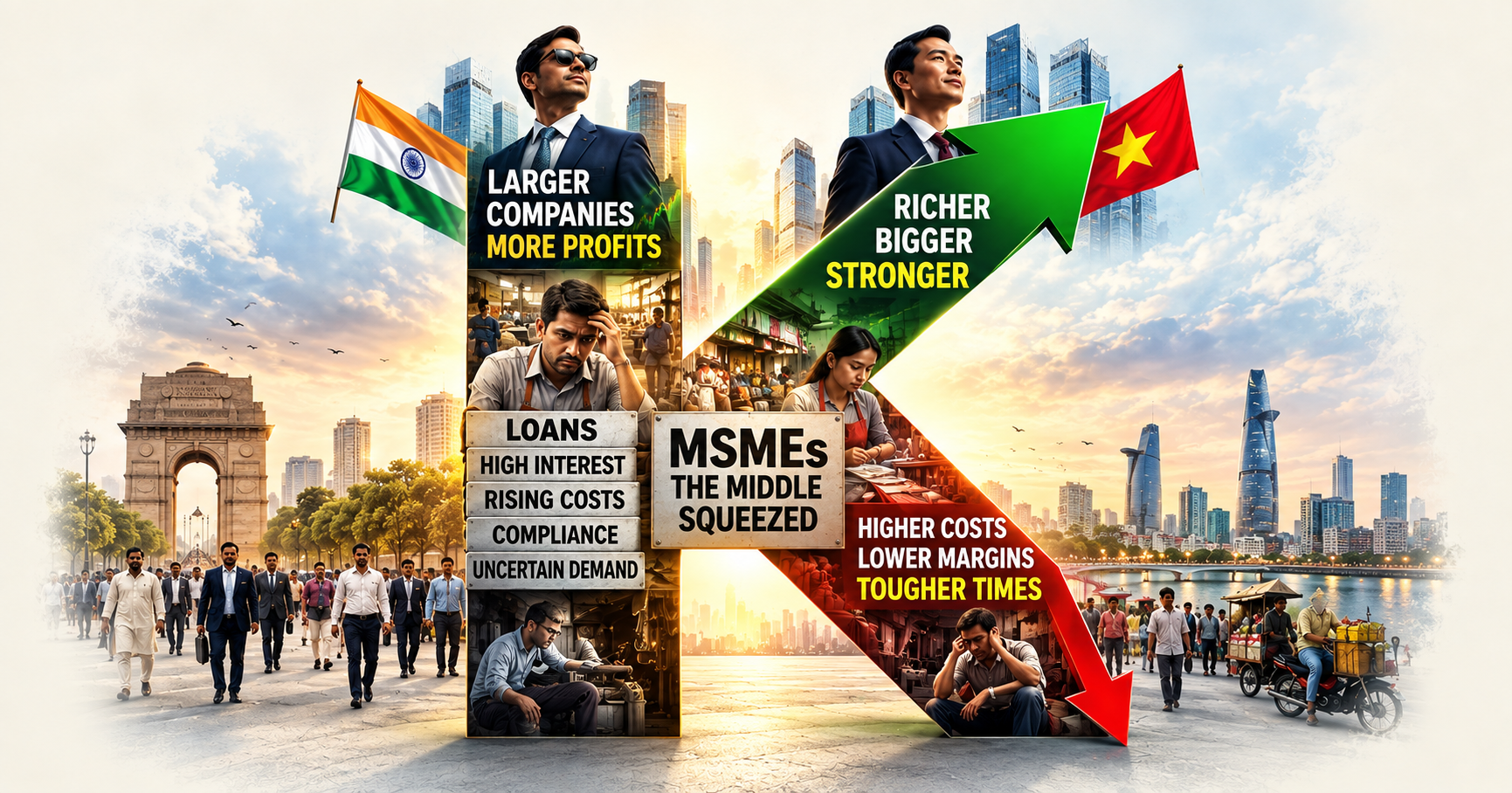
For Indian exporters, particularly MSMEs dependent on American buyers, the consequences could be serious. Some may reduce margins to remain competitive. Others could lose orders or redirect products to Europe, Asia, the Middle East or other markets. India can diversify its export destinations, but replacing American demand cannot happen overnight.
Yet this is where the tariff argument becomes more complicated.
The tariff is collected from the US importer. The importer can negotiate a lower price from the Indian supplier, absorb some of the additional cost, pass it through the supply chain, or search for another supplier. Consequently, the economic burden can be shared.
Consider an Indian engineering component that costs an American company $100. A 100% tariff could make its landed cost dramatically higher. The American buyer might switch to a supplier in another country. But if that substitute costs $150 or $170, the American company has still lost the advantage of the cheaper Indian supply.
The same logic applies to pharmaceuticals, electronics, textiles and industrial inputs. Substitution is possible, but substitution is not necessarily cost-free.
This is the paradox Washington must consider.
The United States may be able to make Indian exports less competitive. But it cannot automatically prevent American businesses and consumers from encountering the consequences. Higher import costs, alternative sourcing and supply-chain adjustments can eventually feed into prices and business margins.
There is also a strategic question.
Washington wants India as a partner in the Indo-Pacific, critical supply chains, technology, defence and efforts to diversify manufacturing away from excessive dependence on China. A tariff policy that severely disrupts commercial ties with India could work against some of those wider objectives.
India, meanwhile, should not underestimate the threat. A 100% tariff could hurt exports, investment and employment in vulnerable sectors. Nor can India assume that alternative markets will immediately compensate for lost American demand.
But Washington should not confuse the ability to impose pain with the ability to secure compliance.
The real question is not whether America can hurt India. It can.
The question is whether a tariff designed to pressure India over Russian oil will change India’s energy calculus — or simply make Indian exports more expensive, American sourcing more complicated and the strategic relationship between two major economies more difficult.
A tariff can certainly make India bleed.
But in an interconnected global economy, some of that economic pain can travel back across the ocean.




Leave a Reply