
MSME Briefing Bureau
સપ્લાયર્સ ની વર્કિંગ કેપીટલ પર મોટી કંપનીઓના તાગડધિન્ના?
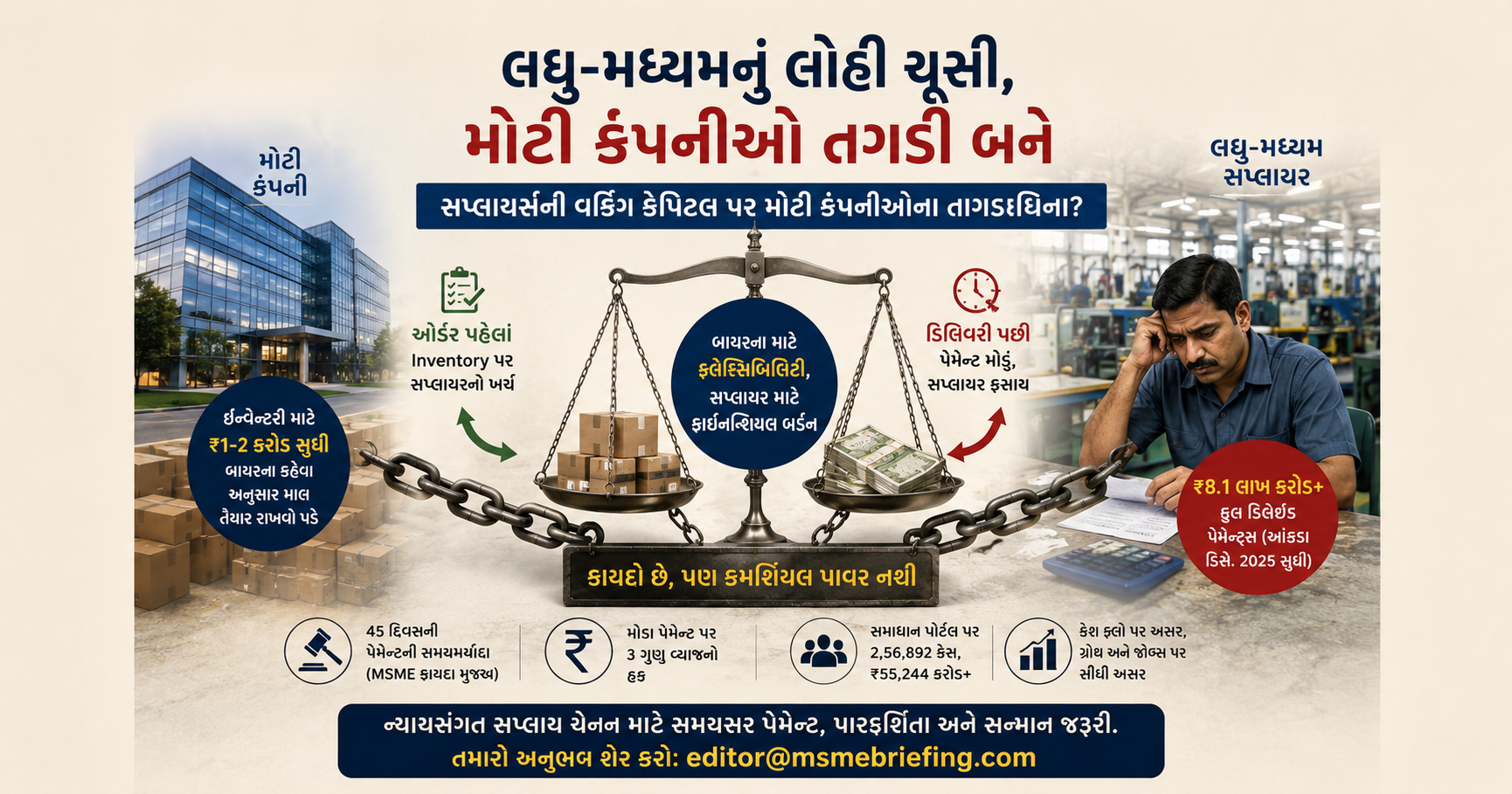
ભારતને વૈશ્વિક મેન્યુફેક્ચરિંગ હબ બનાવવાની વાત થાય છે. પરંતુ આ વૃદ્ધિ પાછળ એક અદૃશ્ય નાણાકીય વ્યવસ્થા પણ ચાલે છે—સપ્લાયરની working capital. એક industrial founderએ MSMEBriefingને જણાવ્યું કે તેની કંપનીએ કરોડો રૂપિયાનું buyer-specific inventory નો સ્ટોક રાખવો પડે છે, જ્યારે production schedule અનિશ્ચિત હોવા છતાં. બીજી તરફ, delivery પછી payment મોડું થાય તો સપ્લાયર ફરીથી buyerને finance કરે છે. આ બે ઉદાહરણો ભારતની supply chainમાં છુપાયેલા financial riskને સમજવા માટે પૂરતા છે. તેની અસર cash flow પર પડે છે.
ઓર્ડર પહેલાં જ મૂડી ફસાઈ જાય ત્યારે
એક industrial founderએ પોતાની ઓળખ અને buyerનું નામ જાહેર ન કરવાની શરતે શેર કરેલી માહિતી મુજબ, એક મોટી engineering company માટે job work કરતી વખતે તેને approved અથવા mandated vendors પાસેથી material ખરીદવું પડતું હતું. Production ક્યારે શરૂ થશે તે નિશ્ચિત ન હોવા છતાં inventory તૈયાર રાખવાની જરૂરિયાત હતી.
₹1.5 કરોડની inventory છ મહિના સુધી પડી રહે અને borrowing cost 12% હોય, તો interest alone લગભગ ₹9 લાખ થાય. તેમાં warehouse, insurance, handling, material deterioration અને opportunity cost ઉમેરાય તો ભાર વધુ મોટો બને છે.
Buyerને production flexibility મળે છે; supplier તેનો ખર્ચ ઉઠાવે છે.
Quality અને traceability જરૂરી હોઈ શકે છે. પરંતુ buyer-specific inventory માટે advance payment, firm production schedule અથવા buy-back protection જેવી વ્યવસ્થા પણ શક્ય છે. આ જ #SupplyChainFinanceનો મૂળ પ્રશ્ન છે.
Delivery પછી પણ supplier જ financier બને
બીજું ઉદાહરણ Future Group સાથે જોડાયેલા garment vendorsનું છે.
2022માં vendor associationએ જાહેર રીતે આક્ષેપ કર્યો હતો કે ત્રણ વર્ષથી વધુ સમયથી payments બાકી હતા અને લગભગ ₹500 કરોડના તૈયાર માલનો પ્રશ્ન ઊભો થયો હતો. Associationએ લગભગ એક લાખ workers પર અસર થવાની વાત કરી હતી. 2023માં બીજી vendor associationએ Future Group પાસેથી ₹200 કરોડથી વધુ duesની માંગણી કરી હતી અને વ્યાજ સહિત આ રકમ લગભગ ₹500 કરોડ સુધી પહોંચી શકે તેમ જણાવ્યું હતું.
આ vendor organisationsના public claims છે, judicial findings નથી. પરંતુ તેઓ એક મહત્વનો મુદ્દો બતાવે છે.
Supplier raw material ખરીદે છે, workersને ચૂકવે છે, production કરે છે અને goods deliver કરે છે. Payment અટકે એટલે supplier effectively buyerને working-capital finance આપે છે.
અર્થાત્ supplier બે વખત finance કરે છે—production પહેલાં inventory માટે અને delivery પછી receivables માટે.
કાયદો છે, પણ commercial power ક્યાં છે?
ભારતમાં eligible micro અને small enterprises માટે 45 દિવસની payment limit અને delayed payment પર ત્રણ ગણો RBI bank rate મુજબ compound interestની જોગવાઈ છે. Samadhaan mechanism પણ ઉપલબ્ધ છે.
છતાં Economic Survey 2025–26 મુજબ આશરે ₹8.1 લાખ કરોડની રકમ delayed paymentsમાં અટવાયેલી છે. 31 ડિસેમ્બર 2025 સુધી Samadhaan Portal પર 2,56,892 applicationsમાં ₹55,244.31 કરોડના delayed receivables નોંધાયા હતા.
ઘણા suppliers માટે મોટો buyer ગુમાવવાનો ભય કાયદા કરતાં વધારે મોટો બને છે.
Legal right હોવા છતાં પ્રશ્ન રહે છે:
“Claim કરીશ તો આગામી order મળશે?”
Resilient manufacturing માટે શું બદલાવ જોઈએ?
Advance payment, buy-back protection, firm production schedules, delayed holding માટે compensation અને TReDS જેવા mechanisms વધુ અસરકારક બની શકે.
મોટા buyersએ price, quality અને delivery સાથે supplierની financial health પણ જોવી જોઈએ.
કારણ કે financially weak supplier લાંબા ગાળે resilient supply chain બનાવી શકતો નથી.
ભારતને financially stronger suppliers જોઈએ.
આ માત્ર delayed paymentનો મુદ્દો નથી. આ ભારતની manufacturing economyમાં financial risk કેવી રીતે વહેંચાય છે, તેનો પ્રશ્ન છે.
તમારા businessમાં પણ buyer-specific inventory, delayed payment અથવા આવા કોઈ supply-chain pressureનો અનુભવ થયો છે?
તમારી story confidential રીતે શેર કરો. connect@msmebriefing.com પર “Delayed Payment Evidence” subject સાથે લખો.
તમારો અનુભવ ભારતની manufacturing supply chainની વાસ્તવિક સ્થિતિ સમજવામાં મદદ કરી શકે છે.




Leave a Reply