
MSME Briefing Bureau
Investors seek profitability, sound governance and scalable business models
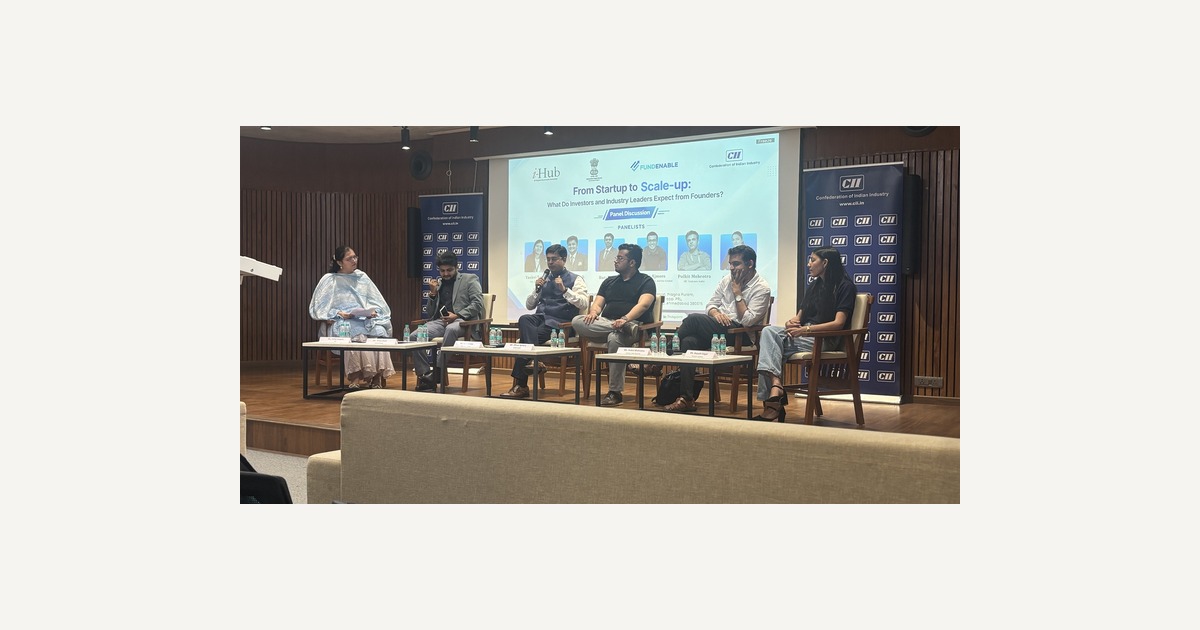
Startups seeking investment must demonstrate more than a promising product or rapidly growing revenue. They need a credible business model, disciplined capital allocation and a clear route to profitability. For deep-tech ventures, where research, development and testing can delay commercialisation for years, generating income from complementary services could be critical to survival. These were among the key takeaways from a panel discussion on what investors and industry leaders expect from founders as startups transition towards sustainable, scalable businesses.
Parallel revenue streams can support deep-tech ventures
Deep-tech startups cannot always depend on their core products to generate immediate revenue. Pulkit Mehrotra, Vice-President at Unicorn India, highlighted the importance of developing parallel revenue streams while the principal technology undergoes research, development and testing.
Space-tech ventures, for instance, may require around two years after investment for development and trial runs before launching production. The initial two to three years can be particularly challenging for deep-tech companies seeking profitability.
Complementary services, proactive customer support, intellectual property and analytics can provide additional monetisation opportunities. A company developing thermal-imaging satellites, for example, could explore commercial applications for satellite data and analytics. Data-sharing models may also create opportunities to monetise information generated by technology platforms.
The objective is to reduce dependence on a single product launch and build a business capable of supporting its operations during the commercialisation phase.
Profitability matters more than revenue
Rutvik Patel, Convener of the CII Startup Committee, emphasised that profitability, rather than revenue alone, should guide financial decisions. Founders must allocate capital carefully and ensure that investment contributes to building a sustainable business.
A product may be copied, but the systems and processes supporting its development, delivery and profitability are harder to replicate. Startups must therefore build operational capabilities alongside product differentiation.
Ishan Shah of Ensafe and the CII Startup Committee stressed the importance of sound corporate governance, long-term vision and a clear understanding of market demand. Product design must reflect customer requirements, while risk mitigation, seamless integration and ease of adoption should be built into the solution.
Global demand can strengthen the investment proposition
Dhruv Ajmera, Investment Head at Ashika Global, highlighted the challenge of attracting foreign investment into Indian startups. He pointed to pension funds and seed funds as potential sources of capital and stressed the importance of developing solutions that address global demand.
Indian founders seeking international investment must demonstrate that their products solve identifiable problems and have commercial applications beyond the domestic market. Competition from China, South Korea and Taiwan makes the ability to attract global capital an important consideration.
Strong teams and credible assumptions build confidence
Ayushi Singhal, representing a climate investment company, emphasised the importance of due diligence, realistic growth assumptions and market assessment. Founders must substantiate their projections rather than rely on overly optimistic estimates.
She also highlighted the need to build a strong core team. Without the right technical and managerial capabilities, investment in machinery and infrastructure may not translate into productive utilisation or growth. Passion and confidence matter, but they must be supported by execution capability and a clear understanding of customers.
The discussion underscored a common principle: investors back businesses with a credible path to sustainable returns, not merely promising products. For deep-tech founders, combining long-term technological ambition with parallel revenue streams, disciplined spending and a capable team could make the difference between surviving the development phase and building a scalable enterprise.




Leave a Reply