
Sunday Musing
By Haresh Jhala:
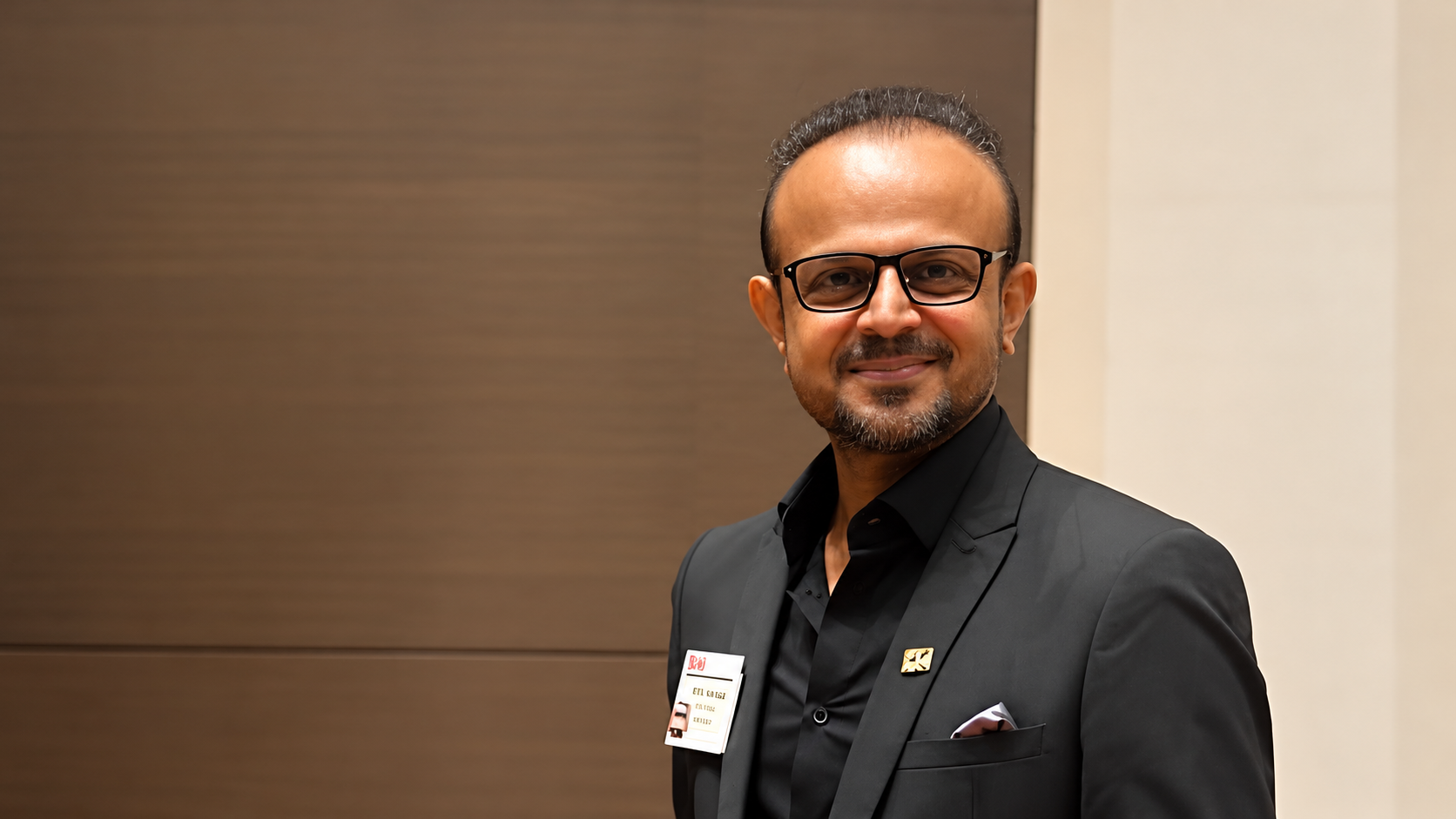
Hetal Thakkar of HK Steel on profit, trust and succession
A ₹10,000 salary offer. A father’s counter-proposition: earn ₹100 a day. That simple choice set Hetal Thakkar on a different path. Today, his approach to steel trading offers MSME founders lessons in delegation, profitability, customer relationships and succession. In a conversation with MSME Briefing, Hetal shared seven principles that challenge conventional business habits—and show how small decisions can shape the way an entrepreneur builds a business.
1. Don’t push the next generation. Give them a target.
After completing mechanical engineering in the 1990s, Hetal received a ₹10,000 salary offer from a Pune-based company through campus recruitment. He returned home and told his father, Kanubhai, that he wanted to accept it.
Kanubhai did not argue. He did not insist that his son join the family business. Instead, he gave him another option: sit at the office and earn ₹100 a day.
Hetal accepted.
His interpretation of the episode is straightforward. His father gave him a small, achievable target. Meeting it created a sense of accomplishment—and the motivation to continue.
There is a lesson here for founders preparing the next generation. Don’t expect a young family member to develop an entrepreneurial mindset simply by joining the business. Give them responsibility, a measurable target and the satisfaction of achieving it.
The takeaway: Start with a target they can own, not a business they are expected to inherit.
2. If your team can do it, why are you doing it?
A friend of Hetal’s came from a family in the same business. His friend and friend’s brother regularly visited the stock yard when steel arrived for unloading.
Hetal wondered whether he should do the same.
Kanubhai’s response was immediate: if a team member could handle the job, why should Hetal spend his time doing it? His focus should be on customers and business expansion.
That advice addresses a familiar problem in MSMEs. Founders often become involved in every operational detail. They supervise deliveries, chase routine tasks and handle matters that capable employees could manage.
The result? The business grows only as fast as the founder’s personal capacity allows.
Delegation is not about losing control. It is about assigning responsibility, setting expectations and holding people accountable.
The takeaway: If every decision and every task comes back to you, you haven’t built a scalable business. You have built a job for yourself.
3. Your first commitment is to yourself.
A delivery date promised to a buyer. A payment date promised to a supplier. A salary date promised to employees.
Hetal sees something deeper in every commitment: the first promise is to oneself. Once you give your word, you must take responsibility for honouring it.
He demonstrated this during his interaction with MSME Briefing. Although he had initially invited the team to his office, he chose to visit the team’s location instead. He wanted to give the interview his full attention rather than risk interruptions from office work.
He had committed his time. He intended to honour it.
For an entrepreneur, credibility is built through such decisions. A missed promise may be explained away once; repeated failures can erode trust.
That does not mean accepting every loss blindly. When circumstances change, communicate early and negotiate fairly. The point is to treat a commitment as a responsibility, not a casual statement.
The takeaway: Your word is part of your business reputation. Protect it as carefully as your money.
4. Every order must answer one question: what will it earn?
Many business owners wait until month-end or year-end to assess their financial performance. Hetal calculates the cost and margin after every order booking.
That changes the questions a founder asks.
Instead of looking only at turnover, the focus shifts to the economics of each transaction. What is the purchase cost? What will transport and handling add? How much capital will be tied up? What margin remains after the relevant expenses?
In steel trading, these calculations matter. A large order can create substantial activity without delivering an attractive return.
Order-level costing also helps identify discrepancies between estimated and actual margins, while bringing greater discipline to working-capital decisions.
The practice demands consistency, particularly when multiple orders are moving simultaneously. But waiting for the accounts to reveal a problem may mean discovering it too late.
The takeaway: Sales tell you how much business you booked. Order-level costing tells you whether that business was worth doing.
5. Before saying no to a customer, calculate the cost of losing one.
One of Hetal’s most regrettable experiences involved a loyal customer who ordered high-grade steel. Delivery to Ahmedabad would take approximately six days.
Three days after placing the order, the customer cancelled it.
Hetal refused to accept the cancellation because of the potential loss. The customer, who had reportedly been doing business with him for around a decade, subsequently stopped buying from him.
The incident left a lasting lesson.
Protecting the margin on one transaction may sometimes damage a relationship that has generated business for years. But accepting every cancellation without considering the financial consequences is not sustainable either.
Could the material be resold? Could the customer share the cancellation cost? Was there scope to renegotiate the delivery or payment terms?
These are questions worth exploring before making a final decision.
A customer relationship should not override commercial discipline. Equally, commercial discipline should not become an excuse to stop looking for solutions.
The takeaway: Don’t just calculate the loss on the order. Consider the cost of losing the customer, too.
6. Take good memories home.
At dinner, Hetal discusses his working day with his family, particularly the good things that happened.
His approach is simple: family members should know what he is doing, experiencing and learning.
For an entrepreneur, the business can easily become a closed world that the family sees only through long working hours, financial pressures or occasional successes. Sharing positive experiences creates another connection.
This is not an argument for bringing every workplace problem to the dinner table. It is about making room for the achievements and learning that give meaning to the work.
The takeaway: Don’t let your family know your business only through its problems. Share the wins, too.
7. Succession doesn’t always mean stepping aside.
In many family businesses, the founder gradually withdraws when the next generation takes charge. Kanubhai and Hetal follow a different arrangement.
Both remain active in steel trading. Each has independent customers and conducts business separately. Neither routinely interferes in the other’s work, yet both support one another.
Their arrangement offers an alternative to the conventional idea that succession must mean one generation surrendering control to the next.
Independence can give the next generation room to develop judgement, relationships and confidence. Continued involvement can allow the founder to remain professionally active without controlling every decision.
Of course, such an arrangement requires trust and clear boundaries, particularly when resources, responsibilities or financial commitments overlap.
There is no universal formula for family-business succession. But founders should consider whether their children need to replicate the business exactly as it exists—or whether they should have the freedom to build their own path.
The takeaway: Give the next generation room to lead without making the previous generation feel it must disappear.
The real business lesson
Hetal Thakkar’s seven lessons are not about complicated management theories. They are about everyday choices: what to delegate, which promises to honour, how to measure an order and when to reconsider a decision.
These choices influence profitability, customer loyalty, employee accountability and the future of a family business.
For MSME founders, the challenge is not merely to build a larger enterprise. It is to build one that can make sound decisions without depending on the owner’s personal involvement in everything.
Because business growth is not just about doing more. It is about learning what deserves your time, what deserves your trust and what you must allow others to do.
Note: As Mr Hetal Thakkar shared in conversation with MSME Briefing.com.\
#Hetal Thakkar, https://www.instagram.com/h.k.steels/, https://www.linkedin.com/in/hetal-thakkar-55933824/





Leave a Reply